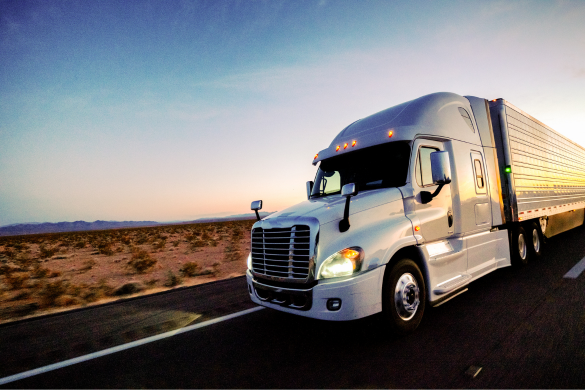
When a commercial truck collides with a passenger vehicle, the consequences are rarely minor.
These crashes often result in broken bones, traumatic brain injuries, spinal damage and losses that can reshape a family's entire future.
If you or someone you love has been hurt in one of these crashes, you may already suspect that the trucking company behind the wheel played a role.
Understanding how corporate carriers can be held responsible is one of the most important steps you can take after a serious accident.
Why Truck Accidents Involving Corporate Carriers Are Different
Not all vehicle accidents work the same way legally. When a private driver causes a crash, liability typically falls on that individual.
Truck accidents involving large commercial carriers introduce an entirely different layer of complexity because there are often multiple responsible parties, layers of insurance coverage, and federal regulations that govern how those trucks are supposed to operate.
The Resources and Insurance Companies Behind Large Trucking Firms
Large trucking companies carry substantial commercial insurance policies, sometimes in the millions of dollars.
This means there is often real money available to compensate victims for serious injuries.
However, it also means that from the moment a crash occurs, those companies and their insurers are working to limit what they pay out.
They have legal teams, claims adjusters, and accident reconstruction experts ready to respond quickly.
Victims who wait to get legal representation often find themselves at a serious disadvantage.
Who Can Be Held Responsible After a Truck Accident?
Liability in a commercial truck accident can extend well beyond the driver behind the wheel.
Depending on the circumstances, responsible parties may include the trucking company itself, a separate freight broker or shipper, the company responsible for maintaining the vehicle, or a third-party contractor who loaded the cargo improperly.
Texas law recognizes vicarious liability, meaning employers can be held accountable for the negligent acts of employees acting within the scope of their employment.
This is a critical principle in truck accident cases because it opens the door to holding a corporation directly responsible rather than pursuing only the driver's individual coverage.
How Driver Fatigue Leads to Serious Dallas Truck Crashes
One of the most common and preventable causes of serious truck accidents is driver fatigue.
Commercial truck drivers often work long hours under pressure to meet delivery deadlines, and exhaustion behind the wheel of an 80,000-pound vehicle can be deadly.
Federal law limits how many consecutive hours a truck driver can operate a vehicle before taking a mandatory rest break.
These rules, known as Hours of Service regulations, exist precisely because fatigued driving dramatically increases the risk of accidents.
When a carrier pressures drivers to skip required rest periods or falsify their logs to meet tight schedules, the company itself bears responsibility for the resulting crashes.
Can Trucking Companies Be Liable for Negligent Hiring?
Trucking companies have a legal duty to screen and hire qualified drivers.
This includes checking driving records, verifying commercial driver's licenses, reviewing past employment history, and testing for substance abuse.
When a carrier cuts corners during the hiring process and puts a driver with a history of violations or impairment behind the wheel, that decision can form the basis of a negligent hiring claim.
In cases where a catastrophic injury results from a crash caused by an unfit driver, evidence of what the company knew or should have known during the hiring process becomes central to proving liability.
An experienced Dallas truck accident lawyer will thoroughly investigate the carrier's hiring and training practices.
What Maintenance Failures Cause Truck Accidents?
Commercial trucks travel hundreds of thousands of miles each year, and that kind of wear demands rigorous, consistent maintenance.
When carriers defer repairs, skip required inspections, or ignore known mechanical problems to keep trucks on the road, dangerous failures become inevitable.
Brake Failures, Tire Blowouts, and Inspection Issues
Brake failures are among the most catastrophic mechanical failures a commercial truck can experience.
A fully loaded semi-truck traveling at highway speed requires significant stopping distance even under ideal conditions.
When brakes are worn, improperly adjusted, or not maintained to federal standards, the stopping distance increases dramatically.
Tire blowouts at high speeds can cause drivers to lose control instantly, often sending trucks across multiple lanes of traffic.
Federal Motor Carrier Safety Administration (FMCSA) regulations require routine inspection of tires, brakes, and other critical systems.
Documentation of missed inspections or deferred repairs can be powerful evidence in a personal injury claim.
Why Truck-vs-Luxury-Car Collisions Often Lead to Catastrophic Losses
The physics of a collision between a commercial truck and a passenger vehicle is deeply uneven.
A loaded semi-truck can weigh 20 to 30 times as much as a standard car. In a direct collision, the smaller vehicle absorbs most of the force.
Occupants of passenger vehicles are far more likely to suffer severe injuries, including spinal cord damage, traumatic brain injuries, amputations, and internal organ trauma.
These injury profiles often mean lengthy hospital stays, long-term rehabilitation, permanent disability, and lost earning capacity.
The full financial impact of a catastrophic truck accident can stretch into the millions, making it essential to pursue every avenue of compensation available.
If you have been seriously injured in a truck accident, you deserve a legal team that will fight for what your case is truly worth.
Contact Aldous Law today for a free consultation.
What Evidence Helps Prove Corporate Liability?
Building a strong case against a corporate carrier requires gathering and preserving evidence quickly.
Trucks and their data are often subject to evidence-preservation obligations, but companies have been known to destroy or allow critical information to be overwritten when no legal hold is in place.
Driver Logs
Electronic logging devices (ELDs) record a driver's hours of service in real time and cannot be easily altered.
These logs can reveal whether a driver was operating beyond legal limits at the time of the crash.
Maintenance Records
Carriers are required to keep detailed records of all inspections, repairs, and maintenance performed on their vehicles.
Gaps in these records or documentation of ignored defects can demonstrate a pattern of negligence.
Black Box Data
Most modern commercial trucks are equipped with electronic control modules that function similarly to an aircraft black box.
This data can capture vehicle speed, braking inputs, throttle position, and other critical parameters in the moments before a crash.
How Federal Trucking Regulations Affect Injury Claims
The trucking industry is one of the most heavily regulated industries in the United States.
Federal regulations establish minimum standards for driver qualifications, vehicle maintenance, cargo securement, hours of service, and more.
Violations of these regulations not only carry administrative penalties; they can also serve as evidence of negligence in a civil lawsuit.
FMCSA Violations and Safety Compliance
The FMCSA sets and enforces safety standards for commercial carriers operating across state lines.
Carriers with patterns of FMCSA violations face increased scrutiny, and their safety records are publicly available.
An attorney handling a trucking company lawsuit in Texas will review the carrier's compliance history to establish a broader pattern of unsafe practices.
Why Insurance Companies Fight Serious Truck Accident Claims
The insurance policies backing large commercial carriers are substantial, and insurers have strong financial incentives to minimize payouts.
From the earliest stages of a claim, insurance adjusters are gathering information that may be used against you.
They may offer a quick settlement that sounds significant but falls far short of covering the full cost of your injuries, future medical care, and lost income.
Accepting an early offer without legal guidance can permanently close the door on fair compensation.
Insurance companies are counting on injured victims not to fully understand the long-term value of their claims.
Why Contacting a Dallas Truck Accident Lawyer Early Matters
Time is a critical factor in truck accident cases. Evidence can disappear. Electronic data can be overwritten.
Witnesses' memories fade. The trucking company's legal team is already working to protect its interests.
Trucking companies have the resources and experience to handle these claims. You deserve representation that matches that strength.
If you or a loved one has suffered serious injuries in a truck accident involving a corporate carrier, learn more about our case results and see how we have helped other families in similar situations.
If a crash has resulted in a fatality, our team also handles wrongful death claims and will work tirelessly to hold every responsible party accountable.
The stakes in a serious truck accident case are too high to navigate alone.
Call (214) 526-5595 or reach out online to speak with our Dallas truck accident lawyers who can help you understand your rights and pursue the full compensation you deserve.