Aldous Law recognizes the struggles faced by burn injury victims in Dallas. Our Dallas team is here to guide you through the process. Contact Aldous Law for a free consultation to discuss your situation and start your recovery journey.
Burn injuries are classified into four degrees, ranging from first-degree burns, which affect only the outer skin, to fourth-degree burns, which harm deeper tissues, muscles, and bones.
Each degree affects medical treatment and recovery time, which can impact potential legal claims in Texas.
Burn Injury Classification in Texas
Burn injuries are classified by how deep they go and how much damage they cause. This matters for both medical care and legal claims in Texas. Generally, the more severe the burn, the higher the medical bills, the longer the recovery, and the bigger the impact on your life, all of which can affect the amount of compensation you can seek.
Seeing a doctor right away after a burn is important, not just for your health but also to document what happened. Medical records play a big role in proving how serious the injury is. Even burns that seem small can get worse or lead to complications if ignored, so getting checked out quickly is always the safer choice.
First-Degree Burns
First-degree burns, also called superficial burns, affect only the outer layer of skin. They’re the mildest type of burn and usually don’t leave lasting damage. Most heal with simple care like cool compresses, aloe vera or similar moisturizers, and over-the-counter pain relievers.
Common signs of first-degree burns include:
- Redness of the skin
- Dry, painful skin
- Mild swelling
- Tenderness to touch
- Peeling skin within a few days
Even though these burns are mild, it’s still a good idea to document them — especially if someone else’s negligence caused them. You may still have a right to have your costs and pain covered.
Second-Degree Burns
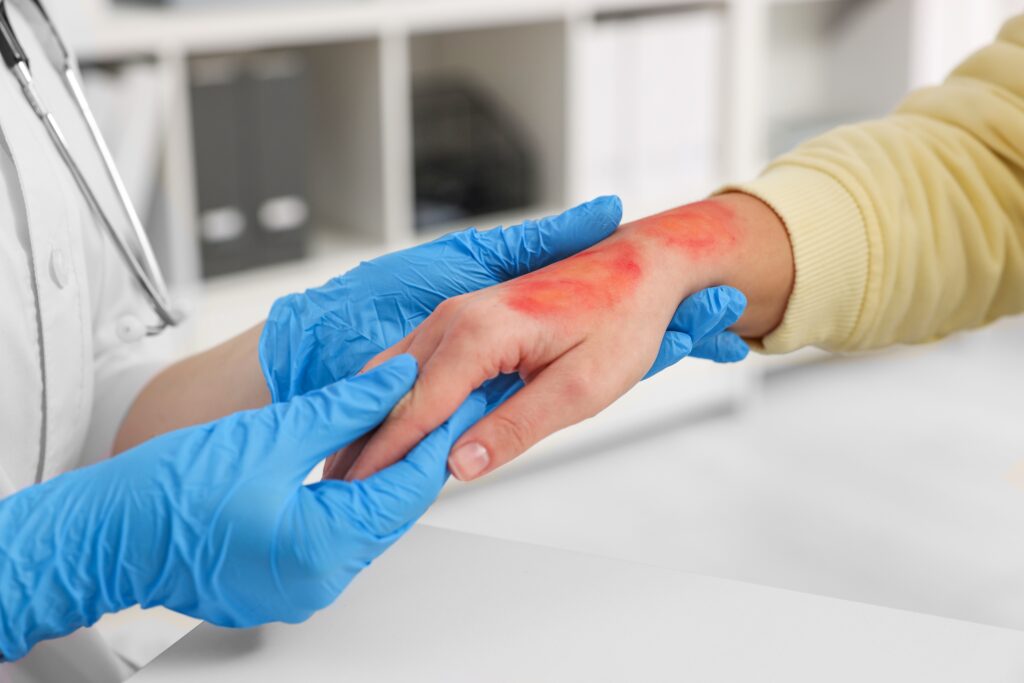
Second-degree burns go deeper, affecting the second layer of skin (the dermis). These burns can be very painful, cause blisters, and take weeks to heal. In some cases, they may leave scars or require medical procedures. Treatment usually involves cleaning the burn, applying special dressings, and managing pain and infection risk.
Signs of second-degree burns include:
- Red or splotchy skin
- Blisters that may break and weep fluid
- Intense pain and tenderness
- Swelling around the burn area
- Wet or moist appearance of the skin
- Possible scarring as the burn heals
Because second-degree burns are more serious, claims for these injuries often include medical bills, lost wages, and pain and suffering. Proper documentation is key to showing the full effect the injury has had on your life.
Third-Degree Burns
Third-degree burns, or full-thickness burns, are the most severe. They destroy all layers of the skin and can damage fat, muscle, and even bone. These burns can look white, brown, or black and feel leathery. Because the nerves are often damaged, the burn area may feel numb even though the injury is severe.
Signs and injuries from third-degree burns include:
- Dry, leathery skin
- Skin discoloration (white, black, brown, or yellow)
- Swelling
- Lack of pain due to nerve destruction
- Possible damage to muscles, tendons, or bones
- Risk of severe infection or shock
These injuries almost always require long-term care, including skin grafts or reconstructive surgery. They can leave permanent scars, limit movement, and lead to big medical bills, which is why pursuing fair compensation is so important.
Types of Burn Injuries in Texas Personal Injury Cases
The severity of a burn injury can affect what kind of legal claim you can make and how much compensation might be available. More serious burns generally lead to higher damages because they require more medical care, take longer to recover from, and often have lasting effects on quality of life
Types of burn injuries commonly involved in Texas personal injury cases include:
- First-degree burns (superficial)
- Second-degree burns (partial-thickness)
- Third-degree burns (full-thickness)
- Fourth-degree burns (deep tissue damage)
- Chemical burns
- Electrical burns
- Thermal burns from fires or scalding liquids
- Radiation Burns
Burn Severity Levels and Lawsuits in Texas
Pursuing a personal injury lawsuit for a burn injury depends heavily on the specific details of each case, including the cause of the injury, the severity of the burn, and the impact on the victim’s life. The legal team at Aldous Law understands that each burn injury case is unique and requires tailored guidance to explore the best options for compensation. We work closely with clients to ensure your claims reflect your true losses and help you to navigate the process with care and respect for your situation.
Contact Aldous Law for Burn Injury Legal Help
Burn injuries can affect nearly every part of your life, how you look, how you move, how you work, and even how you feel about yourself. The pain, the emotional impact, and the financial strain can be overwhelming.
At Aldous Law, we’re here to help carry that burden. We provide compassionate, one-on-one support and fight to get you the resources you need to recover, physically, emotionally, and financially. If you or someone you love has suffered a burn injury, contact Aldous Law today. We’ll stand by your side and work to get you the compensation you need to rebuild your life.